
Two hundred years ago, a poet gave us a sideways definition of faith.
He called it “the willing suspension of disbelief.”
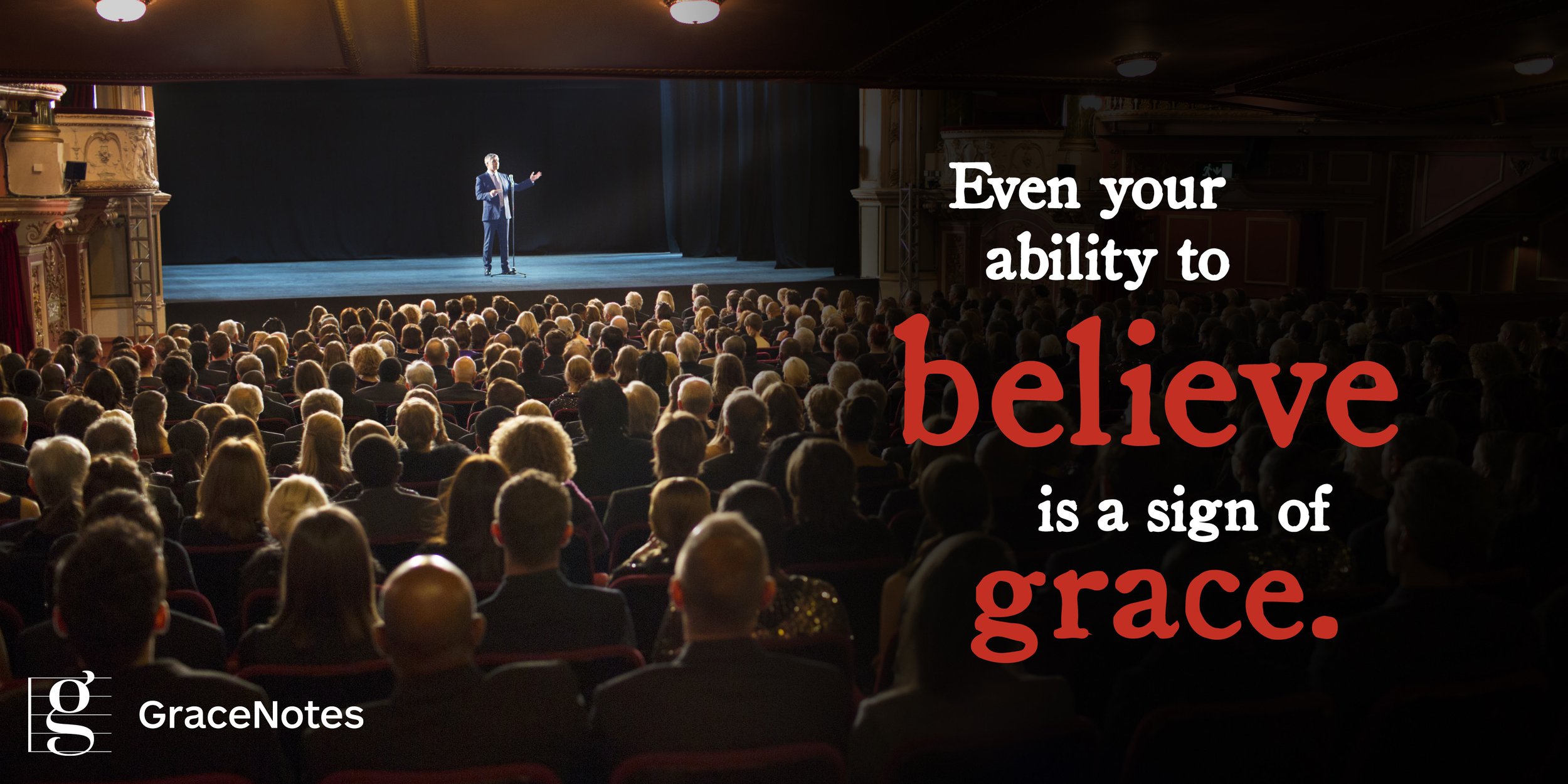
We know that the anxious man in medieval clothes making speeches on the stage isn’t really Hamlet. But for three hours we suspend that part of our brain that makes us disbelieve. We give ourselves to the possibilities in the story that are richer and more true than our cleverest doubts.
So it is that to understand the story God is telling us in Scripture, we must often set aside our daily habit of disbelieving, of challenging the author, of arguing for some grubbier reality. Faith is—and always will be—a choice among other compelling options. The Bible calls it “the conviction of things not seen” (Heb 11:1). When we use our faith, we put our trust in the promise of a reality greater than the sordid, painful stuff in which we wallow and despair. We give ourselves—even briefly—to the story of a God whose love has overcome hate, whose strength holds us in our grief and loss, and who offers us a future beyond our happiest imagination.
“By grace you have been saved through faith” (Eph 2:8). Even your ability to believe is a sign of grace.
So stay in it.
—Bill Knott